


Choosing a name carries profound weight, especially when seeking spiritual depth. Parents exploring Tristan meaning in Hebrew often discover layers of significance that transcend simple definitions, blending ancient wisdom with timeless faith.
While Tristan isn’t originally Hebrew, its thematic resonance with biblical narratives of transformation creates meaningful connections. Understanding Tristan meaning in Hebrew context reveals how sorrow evolves into strength, mirroring countless scriptural journeys of redemption.
Origin and Etymology of Tristan
Tristan originates from the Latin word “tristis,” meaning sorrowful or sad. This Celtic-influenced name evolved through medieval romances, particularly the legendary tale of Tristan and Isolde, capturing hearts across European cultures with its tragic yet beautiful narrative.
The name traveled from Celtic “Drustan” through French “Tristan,” gaining popularity in Arthurian legends. Despite its melancholic root, the name has transformed culturally, embodying resilience and depth rather than mere sadness, reflecting how trials shape character.
TRISTAN: Hebrew Meaning & Biblical Significance
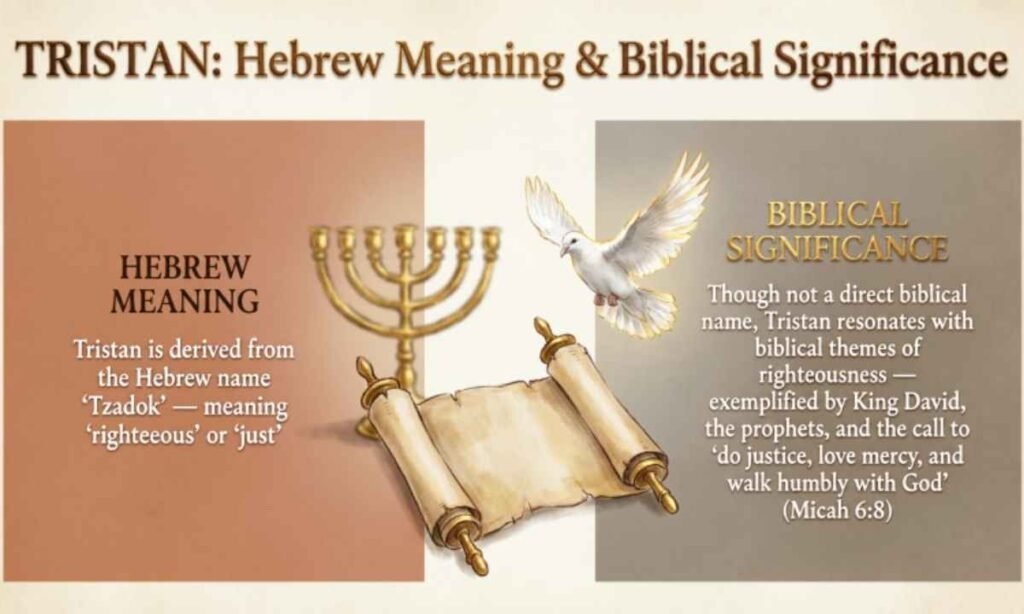
Though Tristan lacks direct Hebrew etymology, its spiritual interpretation aligns with Hebrew concepts of transformative suffering. Biblical Hebrew emphasizes how sorrow births perseverance, wisdom, and ultimately joy, themes that resonate deeply with Tristan’s intrinsic meaning and character.
Hebrew spiritual philosophy views trials as divine refinement. The name Tristan, when examined through this lens, mirrors scriptural patterns where tribulation produces endurance, endurance builds character, and character cultivates hope, as described in Romans 5:3-4.
TRISTAN: Complete Biblical & Hebrew Analysis
Analyzing Tristan biblically reveals thematic connections rather than literal mentions. The name embodies the biblical journey from darkness to light, sorrow to dancing, reflecting Psalm 30:5’s promise that weeping endures for a night but joy comes in the morning.
Hebrew wisdom literature celebrates this transformative arc. While Tristan isn’t scripturally documented, its meaning parallels Job’s story, where profound suffering preceded restoration. This alignment makes Tristan spiritually significant for families valuing biblical themes of redemption.
Read More: 95 Powerful Bible Verse Tattoos for Guys That Inspire Faith
The True Etymology: Where Tristan Really Comes From
Linguistically, Tristan derives from Latin “tristis,” adopted into Celtic as “Drustan.” Medieval French culture popularized it through romantic literature, establishing its enduring presence in Western naming traditions with associations of noble suffering and passionate devotion.
The Arthurian legend cemented Tristan’s cultural identity. The knight’s tragic romance with Isolde became emblematic of love’s sacrificial nature. This historical backdrop enriched the name with layers of meaning beyond its etymological roots.
Tristan in Hebrew Context
Hebrew language lacks a direct equivalent for Tristan, yet spiritual interpretation remains valid. Hebrew thought emphasizes names reflecting character and destiny, allowing non-Hebrew names to acquire spiritual meaning through thematic biblical alignment and faith-centered interpretation.
Applying Hebrew spiritual concepts to Tristan reveals connections to “yagon” (sorrow) transforming into “simcha” (joy). This linguistic bridge helps believers appreciate how the name fits within broader biblical narratives of transformation, even without Hebrew linguistic origins.
Is Tristan Mentioned in the Bible?
Tristan does not appear in biblical texts. The name emerged centuries after biblical canon completion, originating from European medieval culture rather than ancient Hebrew or Christian scripture, making direct biblical references impossible to establish or claim.
However, absence from scripture doesn’t diminish spiritual relevance. Many beloved Christian names lack biblical mention yet carry profound faith significance. Tristan’s thematic alignment with scriptural principles of perseverance provides meaningful spiritual context for believing families.
Biblical Significance and Spiritual Insights
Tristan’s spiritual significance lies in its thematic resonance with biblical transformation narratives. Scripture repeatedly illustrates how God transforms mourning into gladness, weakness into strength, creating a pattern that Tristan’s meaning naturally reflects and embodies.
The Epistle of James declares blessed those who persevere under trial. Tristan symbolizes this journey, acknowledging sorrow while anticipating redemptive strength. This makes the name spiritually rich for families valuing biblical themes of endurance, faith, and divine restoration.
Bible Verses That Reflect Tristan’s Meaning
Romans 5:3-4 perfectly captures Tristan’s essence: suffering produces perseverance, perseverance builds character, and character generates hope. This progression from trial to triumph mirrors the transformation inherent in Tristan’s meaning and spiritual interpretation.
James 1:12 promises blessings for those enduring trials, receiving the crown of life. Psalm 30:5 declares joy comes after weeping. These scriptures embody Tristan’s journey from sorrow toward strength, providing biblical foundation for the name’s spiritual significance.
Spiritual Symbolism of Tristan
Tristan symbolizes the Christian journey through trials toward glory. It represents authentic faith that doesn’t deny pain but trusts God’s redemptive power. This symbolism resonates with believers who value transparency about life’s difficulties alongside confident hope.
The name embodies spiritual resilience, not avoiding sorrow but being transformed through it. This reflects biblical heroes like Paul, who found strength in weakness, or David, who wrote psalms from despair yet praised God’s faithfulness through every valley.
Read More: 60+ Powerful Sending Prayers Quotes to Uplift, Heal, and Comfort
Tristan as a Christian Name
As a Christian name, Tristan offers depth beyond surface appeal. It acknowledges life’s broken reality while pointing toward redemption, making it suitable for families wanting names reflecting both authentic struggle and victorious faith rather than shallow optimism.
Christian parents choosing Tristan often appreciate its countercultural honesty. In cultures emphasizing constant happiness, Tristan reminds believers that sorrow exists but doesn’t define destinies. God transforms every trial into testimony, every wound into wisdom.
Tristan in Legends vs Christian Truth
Arthurian legends portray Tristan’s story ending tragically, love thwarted, lives lost, sorrow unredeemed. Christian truth offers contrasting hope: sorrow transformed, strength from weakness, resurrection after death. This distinction matters when understanding Tristan’s spiritual versus literary meaning.
While medieval romance emphasizes noble suffering without resolution, biblical faith promises redemption. Christian families naming sons Tristan can reframe the narrative, honoring struggle while trusting God’s power to turn mourning into dancing, exactly as Scripture promises.
Famous People Named Tristan
Tristan Thompson, the professional basketball player, brings contemporary recognition to this ancient name. His athletic career demonstrates the strength and perseverance the name symbolizes, showing how Tristan carries meaning across different cultural and professional contexts.
Beyond sports, various artists, actors, and public figures bear the name Tristan, each contributing to its modern identity. These individuals showcase the name’s versatility, proving Tristan suits diverse personalities while maintaining its distinctive character and timeless appeal.
Popularity and Cultural Usage of Tristan
Tristan has enjoyed steady popularity across English-speaking countries for decades. Its medieval charm combined with strong phonetic appeal attracts parents seeking names that sound both classic and contemporary, bridging traditional values with modern sensibilities.
The name ranks consistently in top baby name lists, particularly in the United States, Canada, and United Kingdom. Its cultural acceptance spans religious and secular families alike, though Christian families often appreciate its deeper spiritual layers beyond surface popularity.
Personality Traits Associated with Tristan
People named Tristan often exhibit depth, sensitivity, and emotional intelligence. The name suggests someone who understands life’s complexities, processes feelings authentically, and demonstrates resilience through difficulties rather than avoiding them, reflecting the name’s intrinsic meaning.
Tristans frequently show creative tendencies and empathetic natures. They tend toward introspection and thoughtfulness, valuing authentic relationships over superficial connections. These traits align naturally with the name’s historical and spiritual associations of depth, passion, and transformative strength.
Similar Names and Variations
Names sharing Tristan’s thematic elements include Gideon (meaning “mighty warrior” despite humble beginnings), Jonah (whose sorrow preceded obedience), and Asher (meaning “happy” after trial). These names similarly reflect transformation from difficulty toward blessing and spiritual growth.
Variations like Trystan or Tristen offer spelling alternatives while maintaining pronunciation. Related names include Tristam, Tristian, or Tristin. Each variation preserves the core meaning while allowing personal preference in presentation and cultural adaptation across different linguistic traditions.
How to Use Tristan in a Biblical or Spiritual Context
When using Tristan spiritually, emphasize transformation over sorrow. Connect the name to scriptures about God turning weeping into joy, weakness into strength. This frames Tristan positively while acknowledging the biblical reality that trials produce character.
Parents might pair Tristan with middle names reflecting hope, such as Tristan Emmanuel (God with us) or Tristan Joel (Yahweh is God). This combination honors the name’s depth while anchoring it firmly in faith, creating meaningful spiritual identity.
Conclusion
Exploring Tristan meaning in Hebrew context reveals rich spiritual layers. Though not Hebrew in origin, the name powerfully reflects biblical themes of transformation, perseverance, and redemptive strength that resonate deeply with faithful families.
Ultimately, Tristan meaning in Hebrew interpretation offers parents a name acknowledging life’s realities while trusting God’s promises. It’s a name for those valuing authenticity, depth, and the beautiful biblical truth that sorrow becomes strength.
Frequently Asked Questions
What does Tristan mean in Hebrew?
Tristan does not have a direct Hebrew origin, but spiritually it is often linked to themes of strength, endurance, and faith through sorrow.
Is Tristan a Hebrew name in the Bible?
No, Tristan is not found in the Bible and it is not a traditional Hebrew name, though its meaning aligns with biblical themes.
What is the spiritual meaning of Tristan in Hebrew context?
In a Hebrew framework, Tristan is commonly interpreted as sorrow transformed into strength through trust in God.
Does the name Tristan have a biblical meaning?
While not mentioned in Scripture, Tristan reflects biblical ideas of perseverance, hope after suffering, and spiritual growth.
What does the name Tristan symbolize in Christianity?
In Christian understanding, Tristan symbolizes endurance in trials and the belief that God turns pain into purpose.
Is Tristan a good Christian name?
Yes, many Christian families choose Tristan because it represents faith, resilience, and character shaped through hardship.
Does Tristan mean sorrow in Hebrew?
The name comes from the Latin word tristis meaning sorrowful, but in Hebrew interpretation it is often connected to deeper spiritual strength.
How does Tristan relate to Bible verses about suffering?
Its meaning echoes verses in Epistle to the Romans and Psalms that speak about endurance, hope, and joy after sorrow.
What personality traits are linked to Tristan in a biblical sense?
Tristan is often associated with emotional strength, loyalty, faithfulness, and courage under pressure.
Can Tristan represent strength in Hebrew belief?
Yes, even without Hebrew roots, many interpret Tristan as representing inner strength and steadfast faith during life’s trials.

PrayersPeace is a serene space of prayers and verses, authored by Dome — a dedicated SEO content writer with 5 years of experience, blending faith, words, and digital strategy to inspire peace.